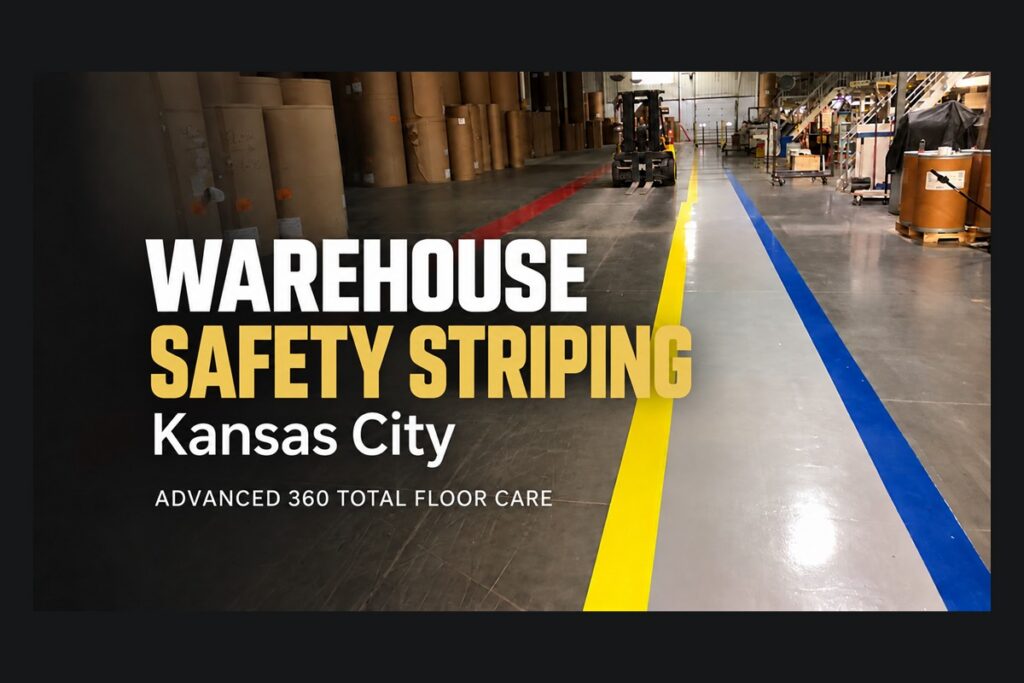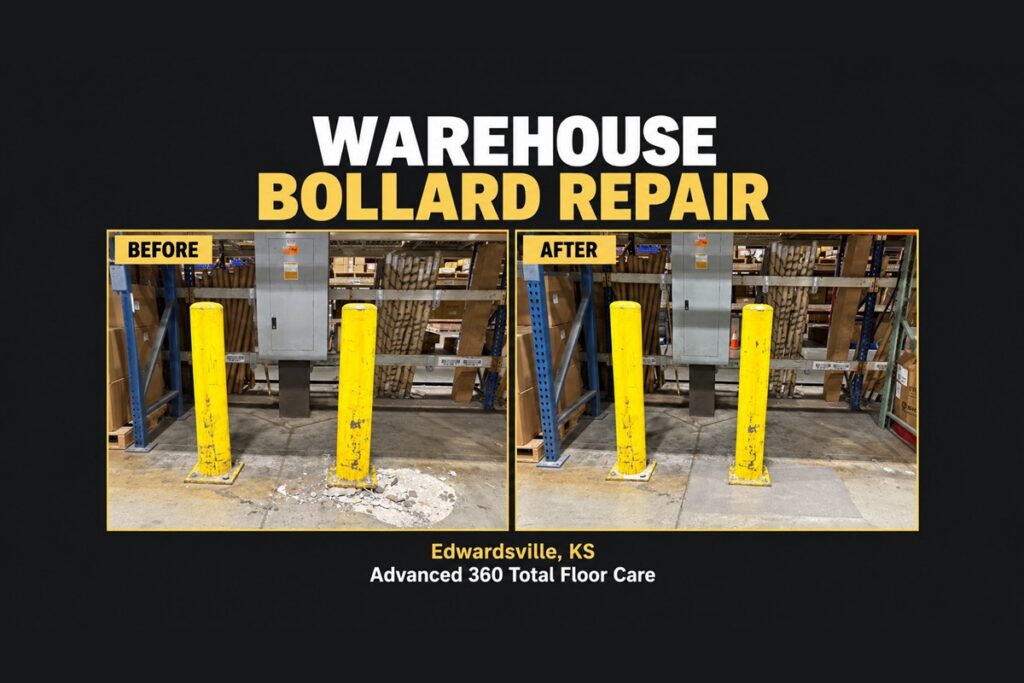


(Video Transcript Below)
Warehouse safety lines have to remain visible in the environment where they are installed. A simple pedestrian walkway may only receive shoes and light carts. A nearby forklift turn can experience hard-wheel abrasion, braking, pallet-jack traffic, tire residue, oil, cleaning chemicals, and repeated scrubbing. Using the same inexpensive material in both areas usually creates unnecessary cost in one zone and premature failure in the other.
The right approach is to divide the warehouse into service zones, define what each marking must do, and select the preparation and coating system for that exposure. The facility receives the durability it needs where traffic is severe without paying for a heavy-duty system in every low-traffic location.
One striping product does not fit every warehouse
Facility managers often request epoxy lines because epoxy is a familiar term. The word epoxy alone does not define performance. Water-based epoxy, high-solids epoxy, 100 percent solids epoxy, urethane, polyaspartic, dedicated floor-marking paint, and tape systems behave differently. Preparation, film thickness, number of coats, clear protection, traffic, temperature, moisture, cleaning, and chemical exposure can matter as much as the resin name.
A contractor should begin with the operational need rather than a favorite product. The questions are practical: Is the line guiding foot traffic, locating a pallet, separating employees from forklifts, warning of a physical hazard, or identifying an emergency access zone? What will cross it, what will spill on it, how will it be cleaned, and how soon must the area reopen?
Four common levels of warehouse floor markings:
| Service area | Typical conditions | Possible system | Main decision |
| Light duty markings | Foot traffic, light carts, low abrasion, dry interior areas | Dedicated industrial marking paint or general-purpose epoxy compatible with the floor | Economical visibility with an acceptable maintenance cycle |
| Equipment and staging zones | Pallet locations, machine footprints, storage boxes, occasional cart or vehicle traffic | General-purpose or upgraded resin system selected by actual traffic and cleaning | The exposure at the location matters more than the purpose of the box |
| Heavy duty traffic zones | Forklifts, pallet jacks, turning, braking, heavy machinery, repeated scrubbing | Properly prepared industrial resin system with abrasion-resistant protection when required | Bond, wear resistance, cure schedule, and repairability |
| Chemical exposure zones | Oils, solvents, acids, alkalis, process chemicals, aggressive sanitation | System verified against the actual chemical, concentration, temperature, and contact time | A generic chemical-resistant claim is not enough |
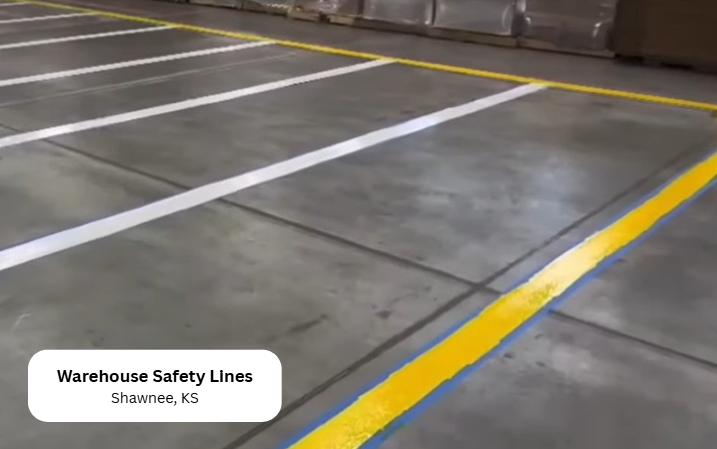
Light duty markings for pedestrian traffic
Pedestrian walkways, office-side warehouse aisles, visitor routes, and low-traffic boundary lines may not require the same build as a forklift turning lane. A dedicated floor-marking coating or a compatible general-purpose epoxy may be appropriate when the slab is dry, clean, sound, and lightly used.
Light duty does not mean no preparation. Dust, tire film, wax, sealers, curing compounds, old paint, and cleaning residue can prevent adhesion. The contractor should identify the existing surface, prepare it as required by the selected product, apply the stated film thickness, and give the facility a realistic maintenance expectation.
Equipment locations and staging zones
Equipment boxes, pallet positions, trash-compactor boundaries, battery-charging areas, and material staging zones are often installed to improve organization. Some receive little direct traffic. Others sit beside machines, loading areas, or forklift routes and receive the same wear as a traffic lane.
The label on the drawing does not determine the coating. A yellow equipment box beside a production line may need greater chemical resistance than a pedestrian aisle. A pallet box in a forklift turn may need abrasion protection even though its only purpose is to show where material belongs. Each zone should be classified by exposure before pricing.
Heavy duty striping for forklifts and machinery
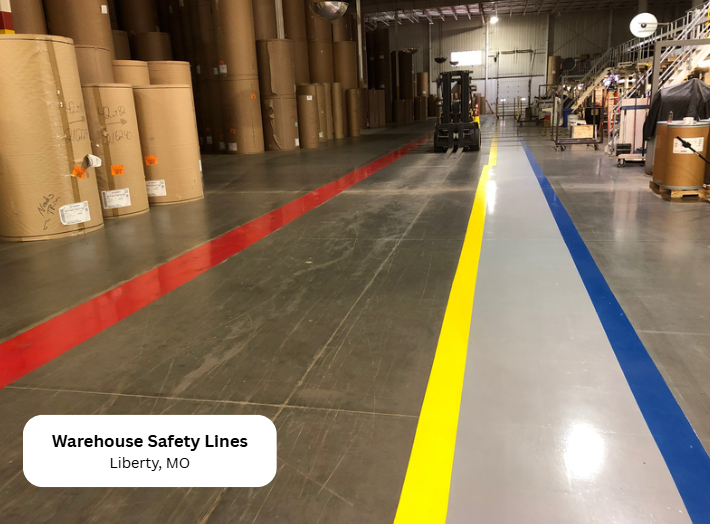
Forklift lanes, crosswalks, dock approaches, intersections, rack aisles, and tight turns place concentrated wear on safety lines. Wheels can scrub across the coating instead of rolling straight over it. Frequent cleaning can add abrasion, and tire residue can make the lines look worn before the coating has failed.
A heavy-duty striping system may include mechanical surface preparation, a compatible primer, a high-build or 100 percent solids pigmented stripe, and an abrasion-resistant urethane or polyaspartic finish. That is an example of a system, not a universal specification. The correct layers depend on the substrate, existing coating, traffic, temperature, chemicals, desired traction, available closure window, and manufacturer instructions.
Clear protection can improve wear resistance in some systems, but it also affects gloss, texture, repair procedures, and cure time. The contractor should provide the exact product names, data sheets, number of coats, coverage or thickness, and written traffic schedule before work begins.
Chemical exposure changes the specification
Chemical resistance is specific. A coating that tolerates motor oil may not tolerate battery acid, concentrated cleaner, solvent, hot wash water, food-processing chemicals, or prolonged immersion. The facility should identify the chemical name, concentration, temperature, spill frequency, expected contact time, and cleanup method.
The contractor should compare that information with current manufacturer resistance data. When exposure is uncertain, the proposal should state the assumption and the limits of the selected system. A vague promise that a product is chemical resistant does not establish whether it fits the facility.
Surface preparation determines whether the lines bond
New striping can fail quickly when it is placed over oil, wax, tire residue, dust, weak concrete, curing compounds, polished surfaces, or poorly bonded old paint. The preparation method must remove the bond breakers and create the surface condition required by the coating manufacturer. ICRI guidance treats the concrete surface profile as a specification decision tied to the material being installed.
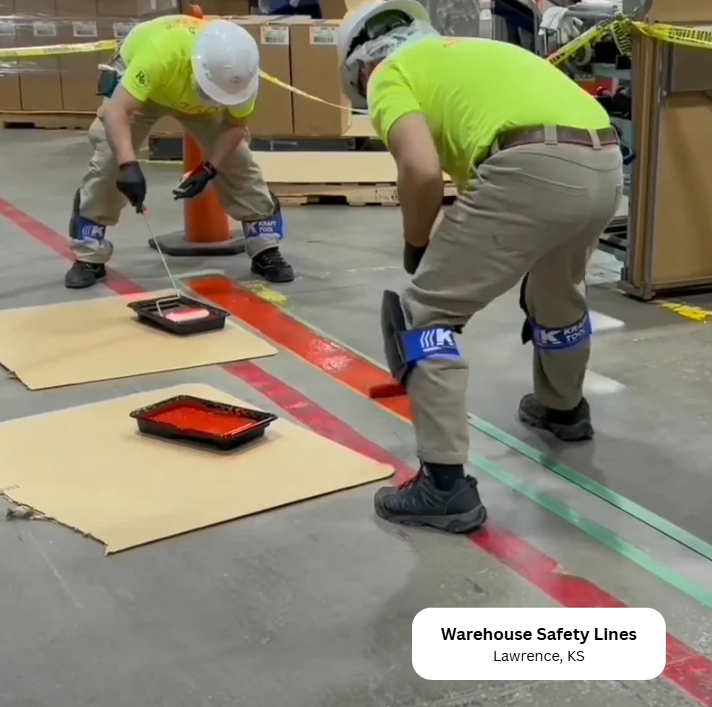
Preparation may include degreasing, coating removal, grinding, shot blasting, scarifying, sanding, vacuuming, or abrasion of an existing compatible coating. The most aggressive method is not automatically the correct method. The objective is a sound, clean, properly profiled surface without leaving contamination or damaging the slab.
Cracks, spalls, low joints, and damaged concrete should be addressed before the layout is installed. A stripe cannot stabilize a moving crack or protect a broken joint edge from forklift impact. Moisture conditions, temperature, dew point when applicable, and compatibility with an existing coating should also be evaluated before application.
OSHA requirements and color choices
OSHA 29 CFR 1910.176(a) requires permanent aisles and passageways to be appropriately marked where mechanical handling equipment is used. It also requires sufficient safe clearances and says aisles and passageways must be kept clear and in good repair. An archived 1972 OSHA interpretation discussed using any color that clearly defines the aisle and widths of 2 to 6 inches. OSHA cautions that this historical guidance may no longer reflect agency policy.
This does not mean every warehouse should choose colors without a plan. OSHA uses yellow to identify caution and certain physical hazards under 29 CFR 1910.144, while a facility may also follow its own safety program, customer requirements, insurance guidance, consensus standards, or corporate color code. The facility’s safety representative should approve the final colors, widths, symbols, and locations. The striping contractor installs the approved layout and should not present a standard color chart as a complete safety assessment.
Fast return to service needs written traffic times
Fast-drying and fast-curing are not the same as ready for a loaded forklift. A coating can feel dry while it is still vulnerable to wheel pressure, turning, cleaning, or chemical exposure. Reopening time depends on the complete system, film thickness, temperature, humidity, ventilation, substrate condition, and the traffic that will cross it.
The project schedule should identify when employees may walk on the lines, when barriers can be removed, when floor scrubbers may operate, and when loaded forklifts may travel or turn across the coating. If primer, multiple color coats, stencils, non-slip aggregate, or a clear finish are included, each layer may add an application or curing window.
Phased work can keep a Kansas City warehouse operating. The crew can divide the project by lane, department, dock, or shift; provide temporary routing; protect wet work; and return each area only after the specified milestone is met. The written schedule should also explain what happens if temperature or site conditions delay curing.
Questions to ask a warehouse striping contractor
- Purpose What must each marking communicate, and who will approve the layout?
- Traffic Which areas receive only foot traffic, carts, pallet jacks, forklifts, turning, braking, or heavy machinery?
- Chemicals What chemicals, cleaners, oils, temperatures, and contact times must the system tolerate?
- Existing floor Is the substrate bare concrete, polished concrete, sealed concrete, epoxy, urethane cement, or another coating?
- Old markings Will failed paint, tape, adhesive, or incompatible coating be removed before restriping?
- Preparation What cleaning and mechanical preparation will be used, and how does it match the product instructions?
- Repairs How will cracks, spalls, damaged joints, and weak concrete be handled before layout?
- Products What are the exact primer, color coat, aggregate, and topcoat products?
- Thickness What film thickness or coverage will be installed, and how will the crew control it?
- Layout control How will dimensions, line widths, colors, stencils, and change approvals be documented?
- Traction Does the area need added texture, and how will that affect cleaning and appearance?
- Reopening When may employees, scrubbers, pallet jacks, and loaded forklifts use the area?
- Phasing How will work zones, alternate routes, dust, odor, ventilation, barriers, and shift changes be managed?
- Quality control What field conditions, batch information, photos, and completion checks will be recorded?
- Warranty What is covered, what maintenance is required, and what traffic or substrate conditions are excluded?
What a complete proposal should include
 A drawing, marked photograph, or written location list that defines every line, box, crosswalk, word, arrow, and stencil
Approved colors, widths, dimensions, and quantities
Existing-floor conditions and stated assumptions
Cleaning, removal, repair, and surface preparation methods
Exact coating products, layers, texture, coverage, or thickness
Environmental requirements and ventilation controls
Phasing, barriers, alternate traffic routes, and daily cleanup
✅ Written reopening times for foot traffic, cleaning equipment, and loaded forklifts
Change-order procedures for hidden contamination, failed substrate, or additional removal
Completion photographs, care instructions, exclusions, and written warranty
Why warehouse safety lines fail early
Premature failure is often blamed on the product even when the system never had a fair chance to bond or cure. Common causes include coating over contamination, inadequate abrasion of a glossy surface, painting over loose markings, weak concrete, moisture, incorrect mixing, thin application, missed recoat windows, low temperature, premature traffic, and a light-duty material placed in a severe forklift path.
Layout decisions can also shorten service life. A line placed directly through a forklift pivot point will wear differently from one moved several inches outside the wheel path. A site walk with operations and safety personnel can identify those conflicts before installation.
Warning signs when comparing contractors
❌ The proposal says epoxy without naming the complete product system
❌ The contractor plans to coat over dirt, oil, wax, failed paint, or loose tape adhesive
❌ No one checks whether the existing floor is sealed, polished, coated, damp, or contaminated
❌ The quote gives one dry time but does not state when loaded forklifts may turn across the lines
❌ The layout, colors, widths, stencils, and approval process are not documented
❌ There is no plan for barriers, alternate routes, cleanup, or protecting the cure zone
❌ The warranty does not define preparation, maintenance, exposure, or excluded substrate conditions
What affects the cost of warehouse safety striping
Cost depends on lineal footage, line width, colors, stencils, crosswalks, filled boxes, layout complexity, mobilization, old-marking removal, contamination, concrete repairs, surface preparation, primer, number of coats, topcoat, texture, chemical resistance, access, temperature, ventilation, off-hours work, phasing, cure protection, and return visits.
A low price per lineal foot may omit the work that controls durability. Facility managers should compare the complete scope, not only the final line length. The least expensive plan may be a mixed specification that uses a practical light-duty system in low-wear areas and reserves the higher-performance system for severe traffic.
Warehouse striping should not become your second job
Facility and warehouse managers should not have to identify coating chemistry, supervise every preparation step, chase several crews, or guess when traffic can reopen. A well-managed project provides one accountable contact, a written layout, clear phasing, scheduled updates, daily cleanup, completion photos, and documented reopening criteria.
Advanced 360 Total Floor Care installs warehouse floor markings and industrial safety striping across the Kansas City metro. We classify the service zones, inspect the existing surface, match the preparation and coating system to the actual exposure, and coordinate the work around operations. Our Pain-Free Service approach is designed to reduce the follow-up required from the facility manager, and our proposals include a written 12-month workmanship warranty for the work covered by the scope.
Warehouse safety striping help in Kansas City
If your warehouse needs new pedestrian aisles, forklift lanes, equipment boxes, crosswalks, keep-clear zones, directional arrows, or replacement striping, begin with an on-site assessment. Provide the facility address, floor plan if available, photographs, traffic types, forklift schedule, known chemicals, cleaning methods, existing floor system, preferred colors, and available closure window.
Advanced 360 Total Floor Care can separate light-duty, equipment-location, heavy-traffic, and chemical-exposure areas into a clear scope so each zone receives the level of performance it needs.
➜ Learn more about Warehouse Safety Striping for clearer traffic flow, work zones and pedestrian areas.
Frequently Asked Questions
What is the best coating for warehouse safety lines?
- There is no single best product for every warehouse. The contractor should match the coating to the substrate, traffic, wheel type, turning, chemicals, cleaning, temperature, traction, appearance, and closure window. Low-traffic walkways and severe forklift turns may need different systems.
Does OSHA require yellow aisle lines
- OSHA requires permanent aisles and passageways to be appropriately marked where mechanical handling equipment is used. An archived 1972 interpretation discussed allowing any color that clearly defines the aisle, but OSHA warns that the letter may no longer reflect agency policy. Yellow is associated with caution and certain physical hazards, but the facility should approve a consistent color plan that also reflects other applicable requirements.
How wide should warehouse aisle lines be?
- OSHA 29 CFR 1910.176(a) requires appropriate aisle markings but does not specify a numerical line width. An archived 1972 interpretation discussed markings 2 to 6 inches wide; OSHA cautions that it may no longer reflect agency policy. The final width should fit the facility layout, visibility needs, traffic, and applicable requirements.
Can new striping be applied over old paint?
- Only when the existing coating is firmly bonded, clean, compatible, and properly abraded for the new product. Loose paint, tape adhesive, oil, wax, and incompatible coatings should be removed. A small test area may be useful when compatibility is uncertain.
How soon can forklifts cross new safety lines?
- The answer depends on the complete coating system, thickness, temperature, humidity, ventilation, and forklift load. Ask for a written time for loaded forklift traffic and turning. A dry-to-touch time is not the same as a traffic-ready time.
Do all warehouse areas need heavy duty epoxy striping?
- No. Pedestrian-only areas and lightly used equipment boxes may perform well with a less expensive compatible system. Forklift turns, dock approaches, chemical areas, and frequently scrubbed routes may justify a more durable specification.
Can safety striping be completed while the warehouse remains open?
- Often, yes. Work can be divided by lane, department, dock, or shift with protected cure zones and alternate traffic routes. The facility and contractor should approve the sequence and reopening milestones before installation.
How long should warehouse safety striping last?
- Service life varies with preparation, substrate, coating system, thickness, traffic, turning, chemicals, cleaning, temperature, and maintenance. A responsible contractor should describe the expected maintenance cycle and warranty limits instead of promising one universal lifespan.
How much does warehouse safety striping cost in Kansas City?
- Pricing depends on line length and width, filled areas, colors, stencils, old-marking removal, repairs, preparation, coating layers, chemical resistance, off-hours scheduling, phasing, and return visits. An on-site assessment allows the contractor to separate economical low-wear zones from higher-performance traffic areas.
Video Transcript:
This video documents line stripe installation in an occupied factory setting.
Surface preparation precedes the line stripe application. Here it’s achieved by using professional equipment made for the task.
Because it’s an occupied factory care is given to ensure that work doesn’t contaminate nearby inventory or equipment.
Controlled is the dust being made during the concrete preparation work.
Maintaining a clean work environment to protect workers and property from injury and damage is a priority.
This preparation must be done for the new coating but not at the cost of lessened worker safety or facility efficiency.
The preparation work itself is done to adequately clean the concrete and make it ready for the new coating. It’s a clean and effective process.
Once ready the prepared areas are primed by water-based epoxy.
This step ensures the stripes will attain maximum adhesion.
Following the necessary dry time the epoxy-based stripes are installed.
The work is done carefully to prevent drips and splatter.
A methodical process here yields a uniform result.
Whatever the color the same careful approach yields the same professional final product.
And that’s about it line stripe installation in an occupied factory setting.

Dana writes about commercial cleaning, healthcare environmental services, and professional floor care for Kansas City facilities. Through Advanced 360 Total Floor Care and Sani-SAFE Healthcare in Lenexa, Kansas, Dana shares real-world guidance on facility maintenance, infection prevention, floor preservation, inspection readiness, and creating cleaner, safer environments.